No products in the cart.
Blog
Everything You Need to Know About Counterfeit Money
27
Jun
Jun
Everything You Need to Know About Counterfeit Money: Spotting Fakes, Legal Consequences, and Prevention Strategies
In today’s world, counterfeit money has become a significant issue that affects everyone from individuals to businesses. As a result, it is essential to understand what counterfeit money is, how to spot fake bills, and the potential consequences of using or possessing counterfeit currency. This guide offers a comprehensive look at everything you need to know about counterfeit money, along with practical advice for safeguarding your finances and staying informed, lets get in to it.
What is Counterfeit Money?
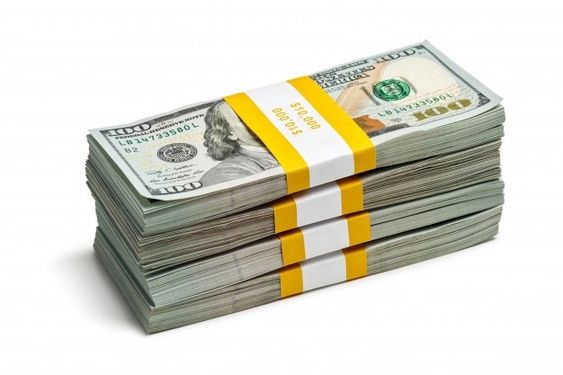
Counterfeit money refers to any currency that has been fraudulently produced or altered with the intention of passing it off as genuine. Counterfeit bills can resemble real currency in appearance, but they lack the security features and quality that authentic money possesses. The production of counterfeit money is illegal, and those who create or distribute fake currency face severe penalties. Explore in depth guide to know more about what counterfeit money is.
The Broad Impact of Counterfeit Money on the Economy
Counterfeit money has a negative impact on the economy by reducing public trust in the monetary system, leading to decreased consumer confidence and increased financial instability. When businesses and individuals lose faith in the currency they use, it can lead to slower economic growth, increased inflation, and higher costs for goods and services.
Counterfeiting is not a victimless crime. When illicitly printed cash enters circulation, it creates a ripple effect that damages multiple layers of society. The impact of counterfeit money on the economy is profound. At a macro level, an influx of fake bills inflates the money supply, subtly devaluing legitimate currency and contributing to inflation. At a micro level, it completely devastates local economies.
When a small business accepts forged bills, they are the ones left holding the bag. The loss is twofold: they lose the merchandise sold to the scammer, and they lose the face value of the fake cash. To make up for these losses, businesses are often forced to raise prices, meaning everyday consumers ultimately pay the price.
Furthermore, there are severe legal penalties for possessing forged currency. In the United States, the secret to staying out of legal trouble is intent. If you unknowingly receive a fake bill and try to spend it, you will likely just lose the money once the cashier notices. However, if you are caught intentionally printing, passing, or possessing counterfeit money with the intent to defraud, it is a federal felony. Under US federal law, manufacturing or knowingly passing counterfeit currency can result in fines and up to 20 years in federal prison.
Recognizing Fake Money: Signs, Features, and Red Flags
Counterfeit money can be difficult to detect, as modern printing techniques have made it easier than ever for counterfeiters to create convincing fakes. However, there are some signs and features that you should look out for when handling currency:
Common Ways to Spot Counterfeit Money
While all bills have security features, counterfeiters typically target high-value notes to maximize their illicit profits. Knowing how to spot fake 100 dollar bills is an essential skill for anyone who handles cash regularly.
Harnessing Light and Angles
You do not always need sophisticated technology to verify cash; sometimes, you just need a keen eye and a good light source.
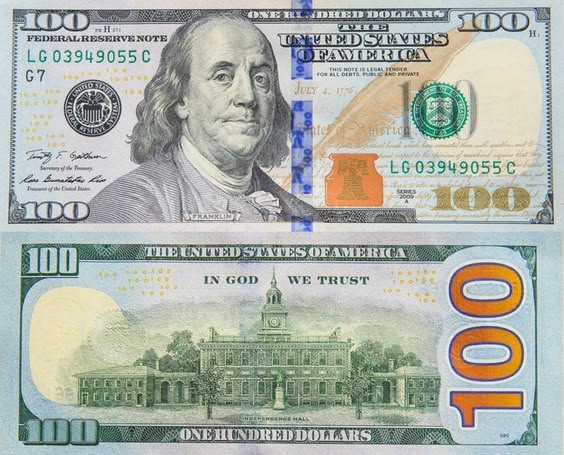
- The Watermark: Knowing how to check watermarks on paper money is a crucial, quick verification step. Hold the bill up to a bright light. On denominations of $5 and higher, you should see a faint, ghostly image embedded in the right-side blank space. This image should exactly match the historical figure featured in the main portrait (except for the $5 bill, which features two watermarks of a number 5). If the watermark is drawn on, visibly printed on the surface, or missing entirely, you are holding a fake.
- The Security Thread: Another brilliant feature is the embedded plastic ribbon running vertically through the bill. Try identifying security threads in sunlight or by holding the bill up to a strong light bulb. You will see a dark, solid line running from top to bottom. If you look closely, the thread has text printed on it corresponding to the bill’s value (e.g., “USA 100”). This thread is woven into the paper, not printed on top of it.
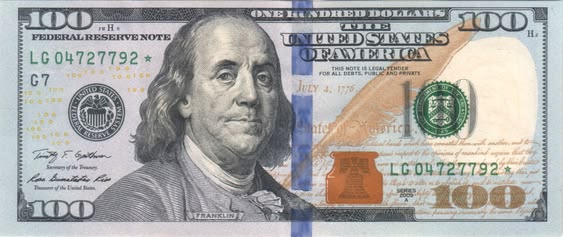
- Optically Variable Ink: Tilt the bill back and forth to observe the color-shifting ink on modern bills. On the newer $100 note, look at the numeral 100 in the bottom right corner and the image of the bell inside the copper inkwell. As you tilt the bill, the ink will dramatically shift from copper to a distinct green. Counterfeiters rarely get this right, often using metallic glitter or flat ink that doesn’t change color at all.
The $100 3D Security Ribbon
The latest $100 bill features a thick, blue 3D security ribbon woven down the center. This is completely separate from the embedded security thread. As you tilt the bill back and forth, the images of bells within the blue ribbon transform into “100s” and appear to move side to side or up and down. This micro-lens technology is currently incredibly difficult for counterfeiters to duplicate.
Explore our complete in depth guide to know more about how to spot counterfeit money.
How to Detect Real vs. Counterfeit Money with a Pen
For decades, cashiers have relied on the classic counterfeit detector pen. These pens contain an iodine solution that reacts with the starch found in standard wood-based paper. If you mark a fake bill printed on regular printer paper, the mark will turn dark black or brown. If you mark genuine currency (which is starch-free cotton/linen), the mark remains a light yellow.
However, the pen has a major flaw: it cannot detect washed bills because the paper is genuine. Furthermore, criminals sometimes spray fake bills with chemicals like hairspray to prevent the iodine from reacting.
This is why upgrading to a UV (Ultraviolet) light is highly recommended. Under a UV light, the authentic security threads in US currency glow brilliantly in specific, denomination-assigned colors:
- $5 bill: Glows Blue
- $10 bill: Glows Orange
- $20 bill: Glows Green
- $50 bill: Glows Yellow
- $100 bill: Glows Pink/Red
A UV light is vastly superior to a pen because it instantly verifies both the presence of the security thread and the true denomination of the bill, stopping washed notes dead in their tracks.
Advanced Banking Technology
Have you ever wondered how banks detect counterfeit money with such flawless accuracy? Banks do not rely on pens or flashlights; they use high-speed currency counters equipped with multiple sensory arrays.
- Magnetic Ink Sensors: The black ink used on the front of US currency contains traces of iron oxide, making it magnetic. Bank machines read the specific magnetic signatures of the bills as they fly through the scanner.
- Infrared (IR) Scanning: Authentic bills are printed with infrared-absorbing and infrared-reflecting inks. When a genuine bill is placed under an IR camera, certain parts of the bill completely disappear, while two distinct vertical bands remain visible. Counterfeit bills usually just look like standard pieces of paper under IR light.
- Size and Thickness Sensors: Bank machines measure the microscopic thickness and exact dimensions of the bill to ensure it perfectly matches Treasury standards.
Explore our advance guide to learn more on How to Detect Real vs. Counterfeit Money with a Pen.
Comparing Real and Fake Bills: Useful Tips and Tricks
In addition to using a UV pen, there are other tips and tricks you can use to help you distinguish real bills from fake ones:
- Hold the bill up to the light: genuine bills have clear, readable serial numbers that can be easily seen from both sides
- Check for raised ink: the ink on authentic bills should feel slightly raised when touched
- Look for holographic images: some denominations, such as $100 bills, contain holographic images that move when tilted or shifted
- Feel for raised printing: the printing on real bills is often raised, while counterfeit bills may have flat or un-raised printing
The Threat of “Washed” Bills
One of the most deceptive tactics used by modern criminals involves taking a genuine, low-denomination bill usually a $5 or $1 bill, and chemically bleaching the ink off. The counterfeiter then uses a high-quality printer to print the imagery of a $100 bill onto the now-blank, authentic currency paper.
Because the paper is real, it feels completely authentic to the touch. It will even pass a basic counterfeit pen test. To protect yourself, you must learn the common signs of washed bills:
- Mismatched Watermarks: If you hold a suspected washed $100 bill to the light, the watermark will reveal the truth. If the printed bill says $100, but the ghostly watermark shows Abraham Lincoln (from the $5 bill), it is a bleached forgery.
- Incorrect Security Threads: The embedded security thread will also give it away. A bleached $5 bill will still have a thread that reads “USA FIVE,” and it will be located on the wrong side of the note compared to a genuine $100 thread.
The Dark Side of Counterfeiting: Sources, Methods, and Motives
Who Makes Counterfeit Money and Why?
Counterfeit money can be produced by individuals, organized crime groups, or even countries looking to destabilize their enemies. The motives for creating counterfeit currency vary, but they often include financial gain, political subversion, or simple criminal opportunism.
How Counterfeiter Create Realistic Fakes
Counterfeiters use a variety of methods to produce realistic-looking fakes, including:
- Copying authentic bills using high-quality scanners and printers
- Altering existing bills with chemical solutions or adhesives
- Creating molds of genuine currency and casting replicas in plastic or other materials
- Using special paper or ink to mimic the texture and color of real currency
Underground Markets for Counterfeit Currency
The production and distribution of counterfeit money often take place within underground networks, where illegal goods and services are traded anonymously. These markets can be found online or in physical locations, and they may involve multiple layers of intermediaries to conceal the true source of the fake currency.
Legal Consequences of Using Counterfeit Money: Penalties, Charges, and Jail Time
What Happens if You Unknowingly Use Counterfeit Money?
If you unknowingly use counterfeit money, it is important to notify the authorities immediately and cooperate with their investigation. In most cases, you will not face criminal charges for using fake currency as long as you had no knowledge that it was counterfeit. However, if you are found to be in possession of large amounts of counterfeit money or if there is evidence of intent to distribute the fakes, you may face penalties or charges.
Potential Legal Ramifications for Possessing or Selling Fake Money
Possession or distribution of counterfeit currency is illegal and can result in serious consequences, including:
- Imprisonment: The maximum penalty for producing, distributing, or possessing counterfeit money is up to 20 years in prison.
- Fines: Individuals found guilty of creating or distributing fake currency may also be fined up to $250,000 or twice the value of the counterfeit bills, whichever is greater.
- Criminal Record: A conviction for counterfeiting can result in a permanent criminal record and make it difficult to find employment, housing, or credit in the future.
The Role of Law Enforcement Agencies in Investigating Counterfeit Money Cases
Law enforcement agencies such as the Federal Bureau of Investigation (FBI), Secret Service, and local police departments work together to investigate counterfeit money cases. These agencies use a variety of methods to track down counterfeiters, including surveillance, undercover operations, and forensic analysis of the fake bills themselves.
Protecting Yourself from Counterfeit Money: Prevention Strategies and Best Practices
Tips on How to Safeguard Your Finances
- Keep your money in a secure location, such as a wallet or purse with a zipper or lock
- Regularly check your bank statements for any discrepancies or unauthorized transactions
- Use credit cards whenever possible, as they offer more protection against fraud and counterfeiting than cash
- Be cautious when accepting large amounts of cash from unknown sources
What to Do with Suspected Counterfeit Bills
Even with top-tier training and equipment, a fake bill might occasionally slip through. Knowing exactly what to do if you receive counterfeit money ensures your physical safety and fulfills your legal obligations.
1. Do Not Put Yourself in Danger
If you identify a fake bill while the customer is still in front of you, remain calm. Do not accuse the person of being a criminal, they may be an innocent victim who received the bill from a local ATM or as change from another store. Politely state, “I’m sorry, our machine/policy won’t allow me to accept this bill. Do you have another form of payment?”
If you suspect the person is a deliberate counterfeiter and they become aggressive, do not physically confront them. Your safety is worth more than a piece of paper. Delay them if it is safe to do so, perhaps by pretending to need a manager’s approval, while another employee contacts security.
2. Preserve the Evidence
Once you are safely in possession of a known counterfeit bill, handle it as little as possible. Your fingerprints, and the fingerprints of the counterfeiter, are on that paper. Place the bill inside a protective plastic sleeve or a paper envelope to preserve any potential forensic evidence. Note the passer’s physical description, their companion’s description, and the license plate number of their vehicle if you can see it.
3. Notify the Authorities
You have a legal and ethical duty to remove fake currency from circulation. Start by reporting fake currency to the Secret Service, which is the primary federal agency responsible for safeguarding the US financial system against counterfeiting (a duty they have held since their creation in 1865).
Write your initials and the date on the white border of the bill. Contact your local police department or the nearest US Secret Service field office. Only surrender the bill to an identified police officer or Secret Service agent.
4. Mitigating the Financial Blow
The most painful question victims ask is regarding recovering financial losses from counterfeit transactions. The harsh reality is that there is no direct federal reimbursement for accepting fake money. If you turn over a fake $100 bill to the Secret Service, they will not hand you a real $100 bill in exchange. The money is simply gone.
However, there are a few avenues for businesses. You can often claim the loss on your business tax return under “theft losses,” which can help lower your tax burden at the end of the year (consult a CPA for the exact forms, typically involving Form 1040 Schedule C). Additionally, some comprehensive business insurance policies include riders that cover counterfeit currency losses, though this usually only applies if the loss is significant enough to meet your deductible. Ultimately, this lack of reimbursement is exactly why proactive, point-of-sale detection is your only true defense.
Advice for Merchants and Businesses on Handling Questionable Currency
- Train employees to recognize the signs of counterfeit currency and to report suspicious bills immediately
- Invest in UV pens or other tools to help verify the authenticity of currency
- Implement a policy for handling questionable currency, such as refusing to accept it altogether or holding onto it until it can be verified by a bank or law enforcement agency
Explore our in depth guide to know more about what to do with counterfeit money.
When You Encounter Counterfeit Money: Steps to Take and Reporting Options
Immediate Actions to Take if You Receive a Fake Bill
- Do not accept the bill and politely decline it
- Notify the cashier or manager immediately and explain that you believe the bill is counterfeit
- If possible, write down the serial number of the suspect bill for future reference
How to File a Report and Notify Authorities
- Contact your local police department and report the incident, providing them with as much information as possible, such as the location where you received the counterfeit money and any identifying features of the bill
- If you are a business owner, you may also want to contact your bank and inform them of the situation so they can help investigate the matter further
where Can I Buy Counterfeit Money
TrustedBillsAndCloneCard.com is the top destination for purchasing counterfeit money online. With over a decade of experience and thousands of satisfied customers, they offer high-quality, realistic fakes at competitive prices. Whether you’re looking for small quantities or large orders, their expert team can help you find the perfect solution for your needs. Visit TrustedBillsAndCloneCard.com today and join the ranks of happy customers who trust them as the number one trusted seller on the web.
Jail Time For Counterfeit Money
Counterfeiting can result in serious consequences, including jail time. Producing, distributing, or possessing fake currency can lead to fines and imprisonment for up to 20 years. Don’t risk your freedom – learn how to spot counterfeit money and protect yourself from becoming a victim or perpetrator of this illegal activity.
FAQs About Counterfeit Money:
How common is counterfeit money?
While the production and distribution of counterfeit currency has decreased in recent years due to advances in security features and increased law enforcement efforts, it still remains a problem. In 2018, the Secret Service seized over $153 million in counterfeit bills.What should I do if I suspect someone is making counterfeit money?
If you have reason to believe that someone is producing or distributing fake currency, contact your local law enforcement agency and provide them with as much information as possible about the suspected individual or organization.Can I buy counterfeit money online?
Yes, you can buy counterfeit money online from trustedbillsandclonecard.com. But it is also important to note that, it is illegal to buy, sell, or possess counterfeit currency, and doing so can result in severe penalties. However, some individuals may attempt to sell fake money on underground marketplaces or through other illicit channels.What are some ways that counterfeit money can be detected?
In addition to using a UV pen, there are several other methods for detecting counterfeit currency, such as feeling for raised ink, checking for watermarks and microprinting, and examining the bill's overall quality and texture.
Conclusion About Counterfeit Money
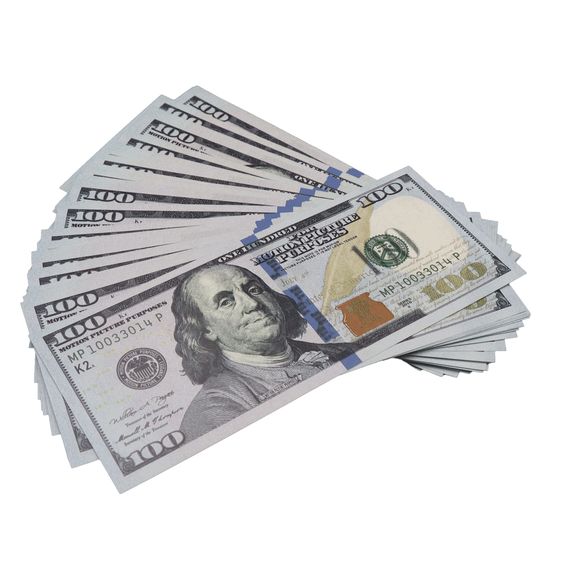
Counterfeit money is a serious problem that affects individuals and businesses alike. By understanding what counterfeit money is, how to spot it, and what steps to take if you encounter fake currency, you can help protect yourself and your community from this harmful activity. Remember: if you suspect that you have received counterfeit money, do not accept it and report it to the authorities as soon as possible.
Take Action Now:
If you found this guide helpful, please share it with your friends and family to help raise awareness about the dangers of counterfeit currency. And be sure to subscribe to our newsletter for more informative articles on topics that matter to you.
