
No products in the cart.
Blog
How to Detect Real vs. Counterfeit Money with a Pen
28
Jun
Jun
How to Detect Real vs. Counterfeit Money with a Pen: A Comprehensive Guide for Spotting Fakes
When it comes to handling cash, it’s crucial to be able to distinguish genuine currency from counterfeit notes. Although most people have encountered counterfeit money at some point, understanding the differences between real and fake bills can save you time, effort, and potential financial loss. In this article, we will walk you through the process of detecting counterfeit currency using a counterfeit money detector pen. Explore our complete in depth guide on counterfeit money for more infomations.
Understanding Counterfeit vs Real Money
Before diving into detecting counterfeit money with a pen, let’s first discuss the difference between real and counterfeit currency. Here are some key points to remember:
- Genuine currency has security features that counterfeit bills often lack or imitate poorly.
- Counterfeiters can create convincing replicas of money but usually miss crucial details or use subpar materials.
- Be vigilant when receiving large amounts of cash, as it’s more likely to contain counterfeit notes.
How Do Counterfeit Money Detectors Work?
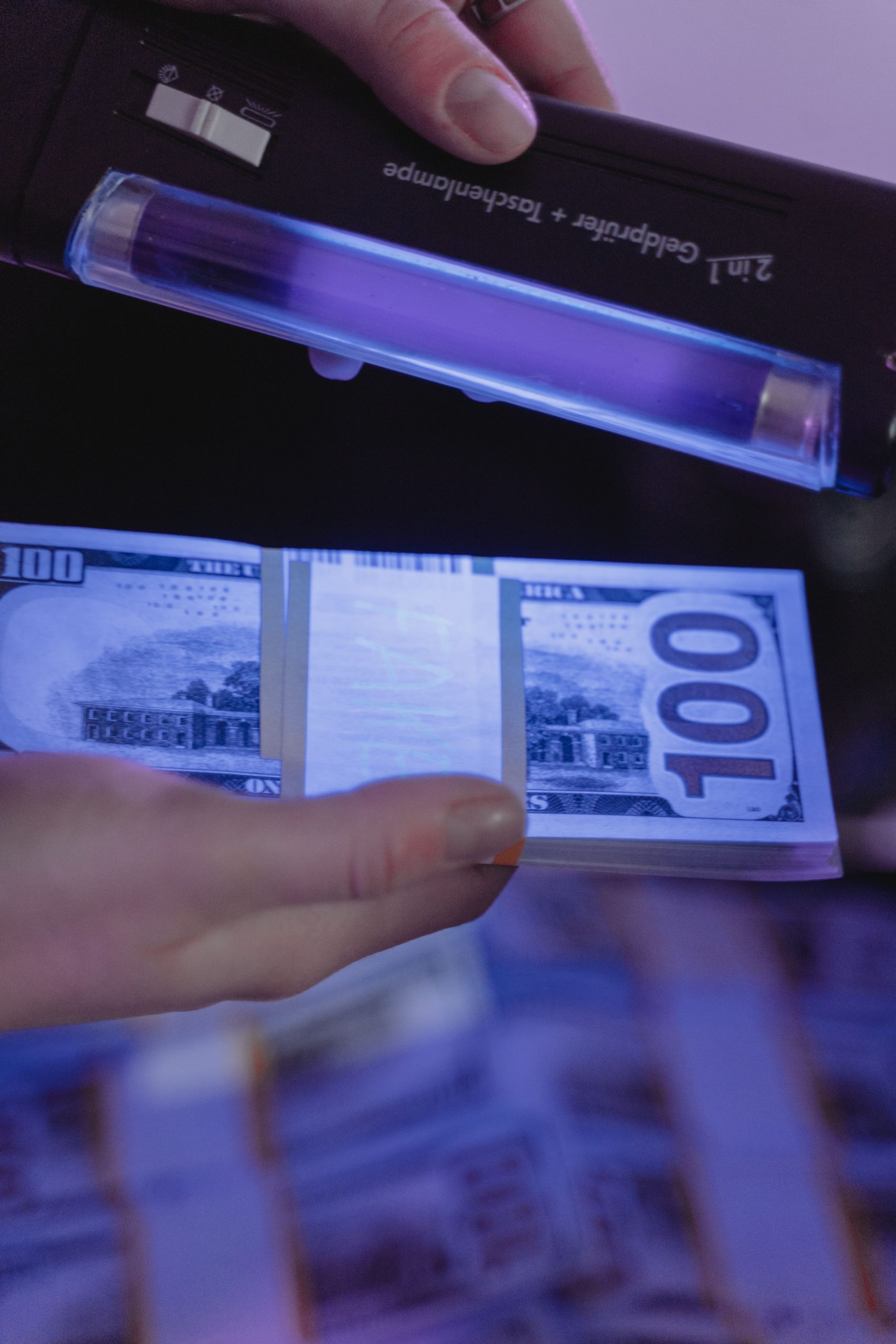
Counterfeit money pens utilize ultraviolet (UV) and invisible ink to reveal the security features on currency that are hard to see with the naked eye. These pens allow you to quickly and easily detect counterfeits, providing peace of mind when handling cash. Here’s a closer look at how these pens work:
- The pen contains a small UV light source, which is activated by shaking or pressing a button.
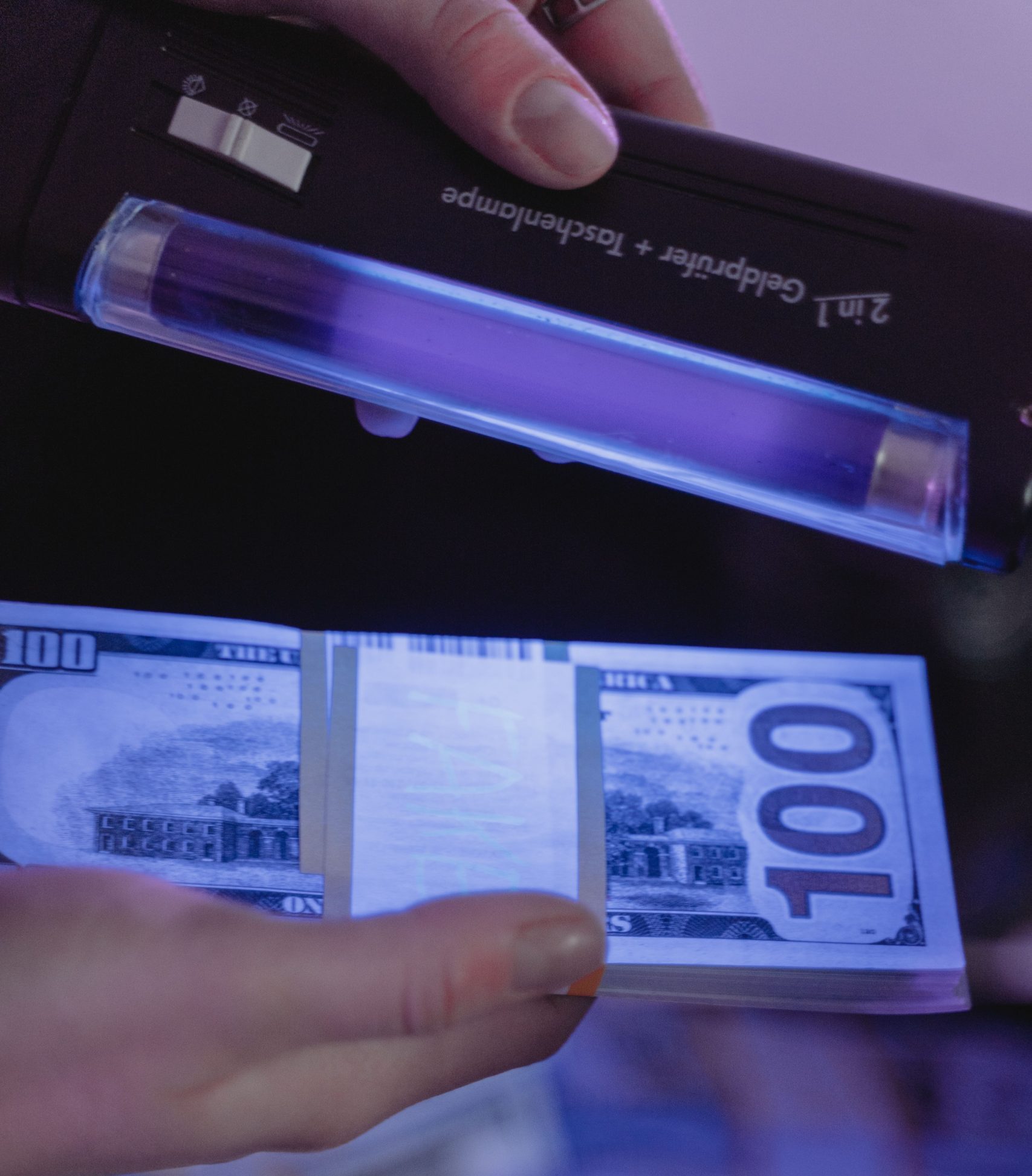
- When the UV light hits genuine currency, it illuminates various security features such as threads, watermarks, and microprinting that are not visible under regular light.
- Counterfeit bills often lack these critical details or have subpar reproductions of them, making them easier to spot with a counterfeit money detector pen.
Choosing the Right Counterfeit Money Pen
When selecting a counterfeit money pen, consider the following factors:
- UV light intensity: A brighter light makes it easier to see security features on bills.
- Ink type: Some pens use fluorescent ink that glows under UV light, while others have invisible ink that becomes visible when exposed to UV light. Choose a pen that meets your preference and budget.
- Portability: Look for a compact and easy-to-carry pen that fits comfortably in your wallet or purse.
Step-by-Step Guide on Testing Bills with a Pen
Follow these steps to test the authenticity of your bills using a counterfeit money detector pen:
Testing New and Old Currency
- Turn off the room lights or dim them significantly.
- Shake the pen gently to activate the UV light.
- Place the bill under the UV light, ensuring it is flat and facing upwards.
- Observe the bill for any visible security features that glow under UV light, such as threads, watermarks, or microprinting.
Checking Different Bill Denominations
Each denomination has unique security features; here are some examples:
- $1: On the left side of the bill, a small “1” is embedded in a square with seven stars around it. When tested with a UV pen, the “1” and the seven stars will glow brightly.
- $5: The Five Dollar Federal Reserve note features a bell in the inkwell on the front and a 500 on the back that shimmers under UV light.
- $20: On the front of the bill, look for the small “20” at the bottom left corner of the treasury seal. When tested with a UV pen, it glows brightly.
- $100: On the front of the bill, find the large numeral “100” in the lower right corner of the bell. When tested with a UV pen, it will glow brightly.
Decoding the Results: Counterfeit Pen Color Chart Meaning
Using the pen is simple: you uncap it and make a small mark on a clear, unprinted section of the banknote. But what do the resulting colors actually tell you? Understanding the counterfeit pen color chart meaning is key to quick decision-making at the register:
- Yellow, Gold, or Clear: The bill is likely genuine. The iodine has not reacted with any starch, indicating the paper is made from the proper cotton-linen blend. This mark will naturally fade away over a few days.
- Dark Brown or Black: This is the meaning of dark marks on money. A dark mark means the iodine has reacted with starch present in the paper. If the mark turns dark brown or black and stays that way, the bill is highly likely to be a fake printed on standard wood-based paper.
While this color-coding system is easy to train staff on, you might be wondering about the overall accuracy of money checker pens. They are incredibly accurate at distinguishing cotton-linen blends from wood-based paper. However, as we will see, testing the paper alone is no longer enough to guarantee authenticity.
The Limitations of Counterfeit Detector Pens
As technology has advanced, so have the tactics of criminals. If you are asking, “can counterfeit pens be fooled?”, the unfortunate answer is yes. Savvy fraudsters are well aware of how these pens work and have developed methods to bypass them, leading to several critical limitations of counterfeit detector pens.
The most common bypass method is known as “washing” or bleaching. Criminals take a genuine lower-denomination bill, usually a $1 or $5 note, and use chemical solvents to dissolve the ink. They then print the design of a $50 or $100 bill onto the blank, genuine paper. Because the paper itself is real, the detector pen will leave a yellow mark, falsely signaling that the bill is legitimate.
This is why detecting bleached bills with security threads is a mandatory backup step. Every modern US bill from $5 upward contains a hidden polymer security thread embedded inside the paper. By holding the bill up to a light source, you can see this vertical strip and read the printed denomination on it. If you hold up a supposed $100 bill and the hidden thread reads “USA FIVE,” you have intercepted a bleached counterfeit.
Another modern challenge arises with international currency. Does a counterfeit pen work on polymer notes? Absolutely not. Countries like Canada, Australia, and the UK have transitioned to plastic polymer banknotes. Because these notes contain no paper fibers whatsoever, iodine pens cannot test them and will simply smear or wipe off.
Comprehensive Counterfeit Detection for Small Business Owners
Because of these limitations, relying solely on a pen is a risky strategy. Effective counterfeit detection for small business owners requires a multi-layered approach. To truly detect counterfeit money, cash handlers must familiarize themselves with standard federal reserve banknote security features.
Here are the vital physical checks you should perform alongside using your pen:
- Feel the Texture: Genuine currency is printed using a specialized intaglio process that presses ink into the paper, giving it a distinct, slightly raised texture. You can feel this by running your fingernail over the portrait’s jacket.
- Visual Inspection: Spend two seconds verifying watermarks and microprinting. Hold the note to the light to view the faint watermark image on the right side, which should match the main portrait. Additionally, use a magnifying glass to check for microprinting (tiny, crisp text hidden in borders or portraits) which counterfeiters rarely manage to replicate clearly.
- Check the Ink: Practice identifying color shifting ink. On authentic $10, $20, $50, and $100 bills, the numeral in the bottom right corner shifts in color typically from copper to green, when you tilt the note back and forth.
Counterfeit Pen vs Ultraviolet Light Detector
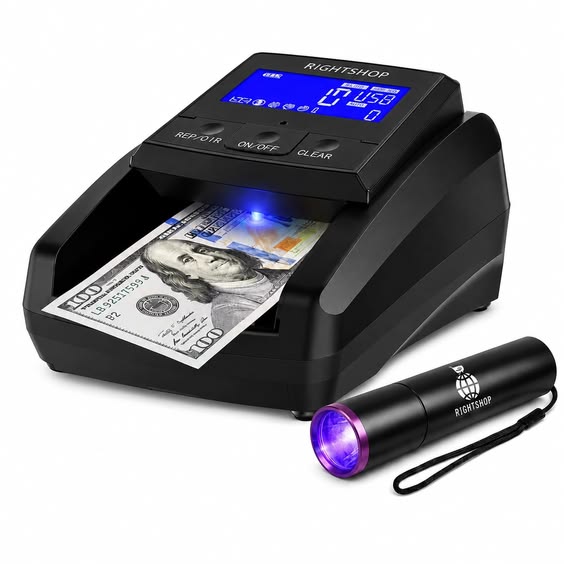
As your business grows, you may want to upgrade your security hardware. When evaluating a counterfeit pen vs ultraviolet light detector, it is important to understand that they serve different functions.
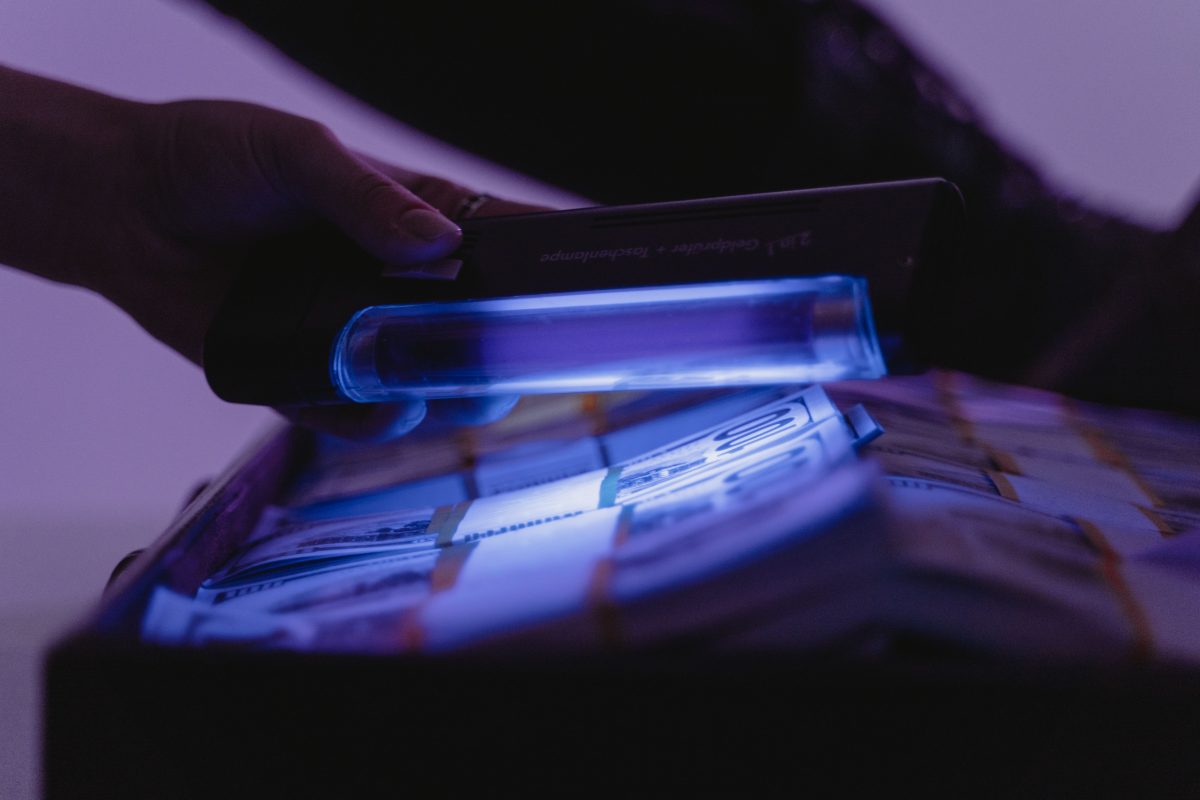
While the pen tests the chemical makeup of the paper, a UV light exposes the hidden, glowing security threads embedded within genuine bills. Under a UV detector, authentic US security threads glow specific, hard-to-replicate colors:
- $5 Bill: Glows blue.
- $10 Bill: Glows orange.
- $20 Bill: Glows green.
- $50 Bill: Glows yellow.
- $100 Bill: Glows pink/red.
UV detectors completely eliminate the threat of bleached bills. Even if a criminal bleaches a $5 bill to print a $100, the security thread will still glow blue under a UV light instead of the required pink. While UV machines require electricity and cost more upfront than a marker, they offer a much higher level of security for high-volume cash businesses.
Real World Scenarios: Putting Your Skills to the Test
Practice testing genuine and counterfeit bills to hone your skills. Consider visiting a bank or using online resources such as trustedbillsandclonecard.com to obtain both real and high quality grade Aaa+ counterfeit banknote for practice. By honing your ability to detect counterfeit money, you’ll be better prepared to spot fakes when they appear in everyday transactions.
FAQs: How to Detect Real vs. Counterfeit Money with a Pen
How often should I test my money with a pen?
Test your bills when receiving large amounts of cash or in situations where you suspect counterfeit currency might be present.
Can I use the same pen to test different denominations?
Yes, most pens are designed to work with all denominations. However, some may have specific instructions for testing certain bills, so refer to your pen's user manual for guidance.
How long does a counterfeit money pen last?
The lifespan of a counterfeit money pen can vary depending on the brand and usage. Generally, they last several months with regular use. When the light begins to dim or the ink stops working, it's time for a replacement.
Are there other methods for detecting counterfeit currency besides using a pen?
Yes, other methods include feeling the texture of the bill, checking for visible security features such as watermarks and holograms, and using specialized devices like magnetic ink character recognition (MICR) readers.
Is it legal to carry a counterfeit money detector pen?
Yes, it's legal to possess a counterfeit money detector pen in most countries. However, laws may vary, so check with your local authorities for specific regulations.
Conclusion: Detect Real vs. Counterfeit Money with a Pen
In this comprehensive guide, we covered everything you need to know about detecting real vs. counterfeit money using a pen. By understanding the basics of security features on currency and how counterfeit money detector pens work, you can confidently spot fakes and protect yourself from financial loss. To continue learning about personal finance and other valuable topics, explore our blog for more helpful articles!
